


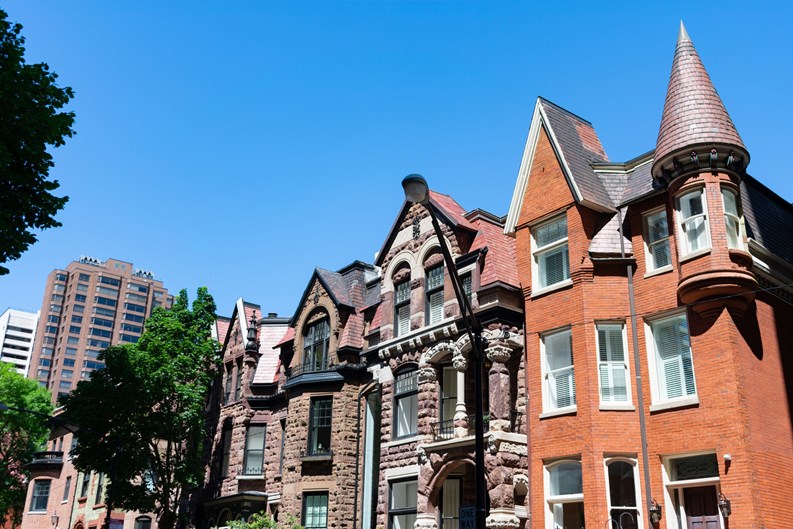
Residential co-ops have played a small but historically meaningful role in Chicago’s housing landscape since the late 1800s. While cities like New York developed large cooperative housing sectors relatively quickly around the same time, Chicago’s co-op movement emerged more gradually, and has remained comparatively niche, reflecting broader economic, social, and urban trends in the Windy City from the late nineteenth century onward.
Luxury + Exclusivity
The earliest residential co-ops in Chicago date back to the late 1800s and early 1900s. At that time, Chicago was rapidly urbanizing, and land values near the lakefront and central neighborhoods were rising. Wealthy households seeking both the convenience of apartment living and the ability to “handpick their neighbors” (as one 1927 Tribune article put it), formed cooperative corporations to purchase and manage luxury residential buildings in these desirable areas. Rather than owning individual units outright, under this model residents bought shares in the corporation which then entitled them to occupy a particular apartment and participate in building governance.
These early co-ops were mostly located in prestigious neighborhoods like Hyde Park, Kenwood, and along the lakefront on the Near North Side. Many were grand residences, fully staffed with uniformed porters and doormen, and designed by prominent architects of the time, including the Art Deco Powhatan Apartments in Hyde Park, designed by Robert DeGolyer and Charles Morgan in 1929. Some, like 1200 North Lake Shore Drive, were built with just one single unit per floor, complete with maids' rooms.
The cooperative model appealed to these affluent residents for several reasons. As previously mentioned, co-op boards had the authority to approve or reject prospective buyers, enabling residents to maintain exclusivity by controlling who could purchase shares in the building. Second, unlike rental buildings, the cooperative structure encouraged long-term investment in the building’s maintenance and operations. Residents collectively shared responsibility for operating expenses, underlying mortgages, and capital improvements, which helped preserve both the buildings themselves and their sense of cohesive community.
Over the Years
Cooperative housing expanded modestly in Chicago during the 1920s and '30s, but never reached the scale seen in New York. The Great Depression made financing for co-op projects difficult to obtain, slowing development significantly. During this period, many planned co-op developments were converted into traditional rental apartments, or just cancelled outright.
Redlining also shaped the development and accessibility of co-ops. Beginning in the 1930s, federal lending policies and neighborhood ‘risk maps’ produced by the Home Owners’ Loan Corporation discouraged banks from issuing mortgages in many Black and immigrant neighborhoods. Because cooperative buildings depend on shared financing and blanket mortgages, these lending restrictions made it nearly impossible to develop or finance co-ops in redlined areas.
After World War II, Chicago’s housing market expanded rapidly as returning veterans and growing middle-class families increased demand for homeownership. In the late 1940s and throughout the '50s, much of this demand was met not through cooperative housing, but through suburban development and federally supported mortgage programs. As a result, many middle-class households moved away from the city center.
During this period, Chicago’s existing co-ops largely continued operating as relatively small, self-contained communities concentrated in older lakefront neighborhoods. Financing for new co-op construction was often complicated because lenders viewed cooperative shares as riskier collateral than traditional real estate ownership.
In 1963, the Illinois Condominium Property Act legally recognized the condominium model of ownership, creating a framework in which individuals could hold title to their own apartment units while sharing ownership of common areas. This structure simplified financing and gave buyers clearer property rights than the co-op model. As a result, Chicago saw a rapid rise in condo development and ownership in the 1960s and 1970s, with many existing co-ops even converting to condo during this time. Today, according to some sources, the city’s condo market dwarfs the cooperative sector by roughly 20 units to 1.
Still Cooperating
But despite this shift, Chicago’s co-ops didn’t disappear. Today, there are around 200 cooperative apartment buildings in the metro area, with the bulk still concentrated in the Gold Coast, Lincoln Park, Hyde Park, and along the North Shore from Evanston to Wilmette—making Chicago the second largest co-op market in the country after New York.
Chicago’s co-ops make up for in character what they lack in numbers. They represent an important chapter in the city’s housing history, and offer a unique alternative between renting and traditional homeownership.




Leave a Comment