


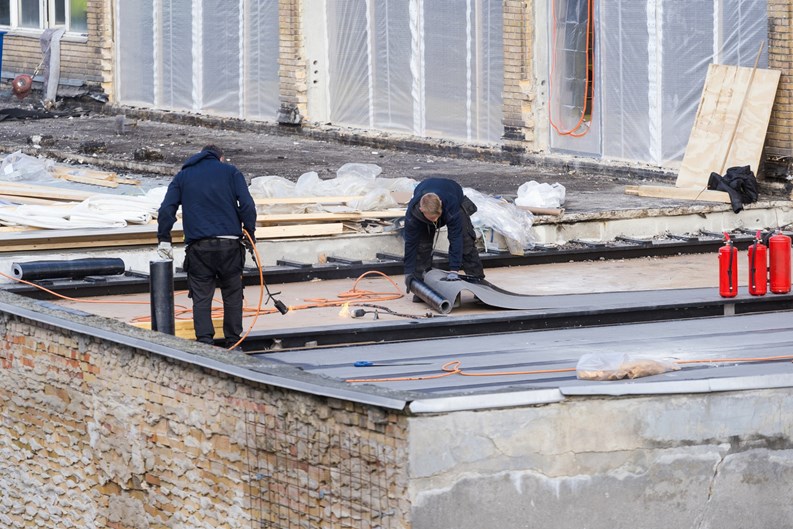
The roof is obviously one of the most critical components of any dwelling, providing both structural integrity and protection from the elements. And though tough by necessity and designed to last for decades, without proper regular maintenance and care a roof can quickly become a costly headache. So while your building’s roof is often out of sight, it should never be out of mind.
Modern Installation & Design
Keeping a roof sound and functional for the long haul starts with the installation process itself. “It all depends on the quality and workmanship of the install,” says Gregory Matthews, manager of New York-based tristate area roofing company Roofs Etc. In his 20-plus years in the business, Matthews says he’s seen ‘younger’ roofs fail and leak due to improper materials, installation methods, or both. When he’s up on a roof, Matthews pays close attention to the materials used, and the contractors performing the work. “When the roof is well done, it should last 28 to 30 years—and you should have a warranty on your roof in case any issues arise.”
Modern flat roofs—the type most commonly used in commercial and multifamily buildings—are designed for durability, energy efficiency, and weather resistance. And they’re more than just tar paper and flashing, according to Sam Martel, president of S&D Roofing in Elmhurst, Illinois, who says a structurally secure roof typically consists of multiple layered components, with each component performing a specific function to keep the building dry, insulated, and structurally protected. At the bottom is the structural deck, usually made of concrete, steel, or wood, which spans the building and supports all roof loads. Above the deck is a vapor barrier, designed to prevent warm, moisture-laden air from the interior of the building from rising into the roof assembly and condensing within it.
Next comes the thermal insulation layer, often rigid foam boards, which reduces heat loss in winter, limits heat gain in summer, and helps control energy costs. Over the insulation is the roofing membrane, the primary waterproofing layer, which may be made of built-up asphalt, modified bitumen, or a single-ply material such as EPDM, TPO, or PVC; its role is to keep rain and melting snow from entering the building. In some systems, especially commercial or multifamily roofs, a cover board is installed between the insulation and membrane to add durability, improve fire resistance, and protect the insulation from rooftop foot traffic.
Finally, says Martel, the roof may include a protective surface layer, such as gravel, a reflective coating, or a walkway pad, which shields the membrane from ultraviolet (UV) radiation, temperature extremes, and mechanical damage, extending the roof’s service life to 20-30 years.
Materials Matter
While the general layered structure of flat roofs hasn’t changed much in recent decades, roofing materials have evolved over time, requiring less labor and providing more protection. “You used to have to roll glue down, wait until it got tacky, and then put the rubber down,” says Matthews, “but it’s very labor intensive. Now we have peel-and-stick shingles, which are awesome because they self-adhere, allowing you to bypass the glue step.”
Matthews notes that most recently, plastic options like TPO and PVC have become available in peel-and-stick formats as well. “This makes the whole process a fully adhered system, rather than being mechanically fastened with screws on either end, which often fails because wind can lift [the section] up in the middle,” eventually loosening the screws and shortening the material’s lifespan through increased wear-and-tear.
Getting Tech-y
Other new technologies are improving roof performance and maintenance as well. According to Martel, drones have become indispensable to the roofing trade, because they enable pros to closely examine roofs and parapets without having to hang a scaffold or even step foot on the roof itself. “This is a technology that is incredible for both the contractor and the customer.”
Along with the eye-in-the-sky capabilities of drones, thermal imaging and moisture scanners installed below the roof surface can pinpoint exactly where repairs are needed most urgently and relay an alert to the building super or management. “If a problem is bad enough for a replacement, we will see it on the scanner,” says Matthews. “It also helps detect where repairs need to be made, so we can figure out what needs to be done to make the roof secure again.”
Staying a Step Ahead
Whether carried out in person or via drone, routine on-site inspections are the first line of roof defense. Simply checking top-floor ceilings for water stains, and looking on the ground outside the building for any roofing materials that may have blown off can help spot trouble. A thorough walk-through should also include inspecting drains and scupper boxes to make sure they’re free from debris, as clogs will cause water from rain and other precipitation to pool on the roof, eventually allowing the water to infiltrate the building.
“You’re looking for moisture,” says Matthews. “And if you do find a leak, you want to deal with that right away. People often wait too long to call in for leaks, and before you know it, everything underneath is destroyed. Mold can get inside the building, which is a very big problem. So if you see signs like interior leaks, visible ponding, or membrane cracks, contact a professional promptly—flat roofs fail quickly once compromised in this climate.”
Indeed, according to the pros, ponding water left on a roof for more than about 48 hours can cause material deterioration, so prompt attention to emerging issues saves valuable time and money. Martel notes that “neglect is the number one most common issue,” he sees. “The roof will only last as long as it’s taken care of. We all get oil changes in our cars every 3,000 miles,” he notes. “Roofs need attention too. We often get called out to repair a leak, and then find disasters from years of lack of attention and inspections. ”
And while it’s critically important to inspect your roof regularly, it’s even more important to assess it after a major weather event like a hailstorm or heavy snowfall. “Illinois winters can hide then reveal damage during thaws,” says Matthews. “Hire a state-licensed, insured contractor experienced with flat and low-slope roofs, and verify their credentials via the Illinois Department of Financial and Professional Regulation (IDFPR).”
More on Professional Inspections
According to Martel, “In Illinois, the process for inspecting a flat or shingled roof and recommending repairs or replacement follows a systematic, professional approach similar to standard industry practices, but adapted to the state's humid continental climate of hot summers and cold winters with freeze-thaw cycles, heavy snow, rain, and occasional severe storms.” This extremely variable weather can accelerate issues like membrane cracking from temperature swings, ponding water from ice and snow accumulation, and moisture intrusion.
Martel outlines a list of recommended inspection steps:
Initial Consultation and Scheduling: Discuss building age, use, and history, roof type (TPO, EPDM, PVC, modified bitumen, etc.), any recent weather events like heavy snow or storms, and any concerns like leaks, ponding, etc. In Illinois, factor in winter damage risks (freeze-thaw, ice dams) and energy code compliance (e.g., IECC for insulation during replacements).
Safety Preparation and Tools: Use harnesses, non-slip gear, ladders and/or drones for visual access, moisture meters, infrared thermography for detecting hidden wet insulation, cameras, core sampling tools, and binoculars.
Visual & Physical Inspection: On a dry day, carefully walk the roof surface. Check for ponding water, and examine membranes for cracks, blisters, punctures, tears, ‘alligatoring,’ shrinkage, seam failures, or UV/thermal wear, as well as checking the condition of any prior patches. Inspect flashings, penetration points for HVAC equipment, vents, pipes, etc. Inspect roof edges, parapets, and seals for gaps, rust, or poor adhesion; Evaluate scuppers, drains, internal gutters for clogs or inadequate slope; Look for debris, vegetation, snow/ice damage remnants, structural sagging, or uneven decking surfaces.
Inside the Building: Check for stains, mold, dampness, or bubbling on ceilings/walls, particularly in top-floor units; Inspect any attic or underside spaces for leaks, rot, condensation, or insulation issues; Note ventilation and potential ice dam effects.
Advanced Testing: Use infrared scans to identify subsurface moisture, or core cuts to verify the condition of the insulation and decking material—especially useful in Illinois for hidden freeze-thaw damage.
Documentation & Analysis: Compile photos, notes, measurements, and scans. Estimate the lifespan of your roof, taking into account local climate stresses: (e.g., TPO/PVC: 20-35 years; EPDM: 20-30 years; modified bitumen: 10-20 years). Balance the extent of any damage against the age, repair history, cost, energy efficiency, and code requirements (Illinois adopts versions of
IBC/IECC; local amendments vary—e.g., Chicago has specific energy rules for replacements).
Report, Estimate, & Next Steps: Once the professional inspection is completed, the inspecting engineer will generate a detailed report containing photos, prioritized findings, any repair-vs-replacement options, costs, timelines, and relevant warranties. Permits are often required for replacements via the local building department, and there may be insurance-related questions, if any damage found is related to a severe weather event or other external cause.
If there’s no widespread moisture or structural concerns. it’s often possible to simply make repairs if the roof is less than 15 years old and any damage is localized and limited to small punctures, flashing fixes, and drain clearing, says Martel.
By contrast, roofs nearing or exceeding their lifespan are more likely to need a full replacement. According to Martel, “Persistent leaks, ponding, recurring repairs, and multiple failures” are all indicators that a roof is in need of replacement.
Do Not Disturb
Needless to say, roof repair and replacement work can be disruptive. “Nobody likes it,” Matthews says bluntly, “but we try to limit disruptions.”
When a roofing replacement project is in the works, it’s important to have town hall meetings with the residents, board, management, and contractors present so that everyone has an opportunity to understand the project and how their lives may be affected by it.
“These meetings notify the residents of what is to come,” says Martel. “Also, as the project progresses, the contractor should be posting notices in the building as to when work will start, and what level of cooperation is expected of the residents to help move the process along smoothly; things like where to park cars, where not to, what area will be designated as a staging area, etc.”
Your building’s roof literally keeps the rain (and everything else) off your residents’ heads—keeping it sound, efficient, and functional is the way to avoid unnecessary costs to both property and pocketbook
Kate Mattiace is Associate Editor of CooperatorNews Chicago



Leave a Comment