


As the days get longer, warmer, and more conducive to outdoor activity, boards and property managers have a laundry list of maintenance and preparation tasks to ready their buildings for the approaching summer. Investing some time, labor, and funds into sprucing up the place each spring pays real dividends in two key ways; Not only is springtime maintenance crucial for keeping structures, landscaping elements, and common areas safe and functional for residents, making the most of your property’s visual appeal is especially important in these months ahead of heightened foot traffic and a brisker real estate market.
From the Top Down
When it comes to inspecting your building and grounds, property maintenance pros generally advise choosing a starting point—either the roof or the cellar—and working through to the other end thoroughly and methodically, checking pipes, fittings, structures, seals, and so forth for any damage, like leaks, cracks, mold, or other signs of deterioration. Chicagoland’s multifamily buildings get a substantial amount of damage each year from snow, ice, and wind, as well as from the tools and materials used to combat them like salt, shovels, plows. Even car exhaust from all the extra idling drivers do when warming up their vehicles can build up into a layer of grime on bricks and siding.
Addressing a building’s structural elements is paramount for maintaining safety, but also serves to keep exterior surfaces looking their best for the warmer months ahead—so the first order of business for any building or property undertaking a spring sprucing is to conduct an inspection for anything that could affect its safety or structural integrity. According to Brian Butler, Senior VP—High Rise at FirstService Residential Illinois, the roof is a natural place to start these inspections, since roofs are particularly vulnerable to the elements. (For a deeper look at roof repair and maintenance, see our article on page 1) If the winter weather has been particularly harsh, an association may need to deal with issues beyond just fallen twigs and grubby signage. “Winter ice damming can be especially damaging to roofs,” says Butler. “Associations should engage a roofing expert to conduct regular inspections to better identify necessary repairs to avoid further water infiltration when the spring arrives in force.”
He explains that during a typically long, cold Chicago winter, snow piled on a roof will start to melt from the heat of the building, but then freeze again as it moves outward, causing ice ridges to form at the roof’s edge. Known as ‘ice damming,’ this condition causes the melting snow to pool and prevents it from draining, leading to leaks and other problems when the weather starts to warm.
Urban buildings also get hit hard with construction debris, black algae, and general air pollutants, while more suburban buildings see green algae from trees—especially on their shaded sides. “To address these issues,” says Marcello Tronci, senior structural engineer and office director at CTLGroup, an engineering, architecture, and materials science consulting and testing firm with offices in both Chicago and New York, “professional façade cleaners typically use a variety of products and methods to keep a façade looking its best. For removing dirt, dust, and grime, professional cleaners may use a low-pressure power washer. For tougher stains and discoloration, cleaners will use specialized cleaning agents and solvents. These solvents come in a variety of forms, including foams, gels, and liquids, and are designed to be safe for the materials of the façade. For more stubborn stains, professional cleaners may use abrasive techniques like sandblasting, media blasting, and pressure washing.
In addition to the surface elements, appurtenances like gutters, awnings, fencing, benches, water spouts, flower beds, and eaves also need to be cleared out and spruced up when the seasons change. Accumulation of leaves and branches; snow and ice; soot, grime, and even water staining can make these components not only look worn and tired, but also not function for their intended purpose. While power washing and chemical treatments generally should be done by professional vendors, in-house staff and even a garden or grounds committee can handle some of the “detailing” of these smaller, ground-level areas—although anything involving a ladder should be delegated to staff or hired professionals who are properly insured.
On the Grounds
With more serious external concerns addressed, landscaping elements, sidewalks, and other paved surfaces can now be assessed for winter damage, springtime sprucing-up, and preparation for summer.
“In spring you want to get all the debris off the lawn, get all the crap out of the yard,” says Christy Webber, president and CEO of Christy Webber Landscapes in Chicago. “You want all that warmth and sun that’s peeking through before the trees leaf out to hit your plants—and it also makes you feel better.”
And even if you’re not a landscaping pro, Webber continues, “It’s pretty obvious that you want to do most kinds of planting in the spring. Seed is about sunshine and warmth of soil, so starting in April, once the soil temperatures are warm, that’s when you want to get any kind of seed down.” Wait too long, she warns, and “by June it’s almost too late to try to germinate any seed. You can pay for it, but with no supplemental spring rain to help you along with your watering, your chances [of successful growth] are slim.”
The harsh winter season also takes its toll on the sidewalks, pavement, asphalt, and sports courts or pool decks surrounding a property. Neil Betoff, president of STAR Building Services in Shrewsbury, New Jersey suggests that managers and building engineers pay particular attention to these areas as they conduct their walk-throughs. “Look for cracking and problems with sidewalks, parking-lot alligatoring [a condition where a series of cracks appear in one area of pavement that often intersect and crisscross in a scaly pattern], potholes, and damaged curbs from snow removal plows,” he says. “Also look for cracks on the building exterior—rain or melting snow can settle into the cracks, then freeze at night, and expand,” causing cracks to widen and leading to serious damage over the long term. He notes that mortar, caulking, and sealants should all be inspected for cracks as well.
Cleaning Up Inside
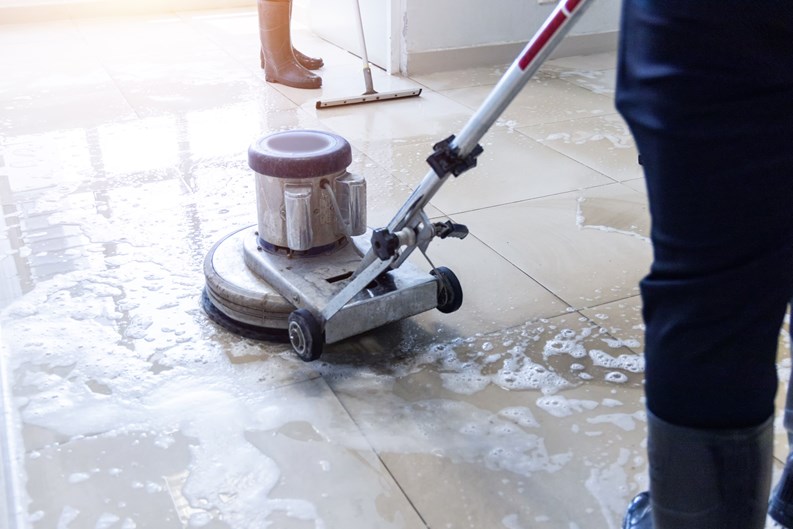
Now that the property’s exterior is safe, clean, and pretty, the interior spaces can likely also use some TLC. The first order of business, say the pros, is floors, including floor coverings: the rugs, carpets, and mats that take a beating in order to protect those underlying surfaces from serious damage and deterioration. Salt, slush, ice, and dirt have been pounded into your floors for the last several months, so now’s the time to schedule a deep cleaning.
And floor cleaning shouldn’t stop at the lobbies. While they might get the most wear and tear—and the most visibility—the dirt, debris, and dampness from more inclement months have likely made their way into common spaces like club houses, amenity rooms, basements, storage areas, and parking facilities as well. Those areas also need to be cleaned and inspected for the season, with special attention paid to those that were either highly trafficked or completely closed during the winter months, such as a pool house. (Nothing says “welcome to summer” like a family of opossums nesting in a locker.)
When getting everything to look its cleanest, brightest, and liveliest on a property, attention should be paid to protecting vulnerable areas and making choices for “sprucing” that are easy to maintain. Planting a new flower bed? Consider a (cute) fence or divider to keep it from being trampled. Giving the windows an extra wash? Don’t forget the blinds, valences, or other window treatments that get just as dirty. Washing windows, pruning bushes and trees, cleaning light fixtures and globes, repainting, and freshening lobby plants and art will also go a long way toward welcoming the arrival of spring—as well as residents returning from winter abodes and prospective purchasers using the fair weather to conduct their home search.
One more piece of advice: prepare for that extra foot traffic that comes with warmer months. “Spring is usually busy for people moving in and out of properties,” notes Butler, “so association staff should prepare heavily trafficked service areas by installing fresh corner guards and ensuring that elevator pads are in good condition to better protect the cabs. These steps can save thousands of dollars in repairs after the moving season is over. Also, the rain that comes with spring can often result in wet lobbies with slippery conditions, so in-house staff should replace worn lobby floor mats, inspect seals around common area windows and doors, and confirm that building drainage systems are free of debris or blockages.”
And according to Butler, the time to address any repair needs these seasonal walk-throughs reveal is definitely now. “The best thing that a board can do to prepare for the spring is to fight the urge to defer reviewing details or making decisions related to upcoming capital repair needs,” he says. “If boards wait until the spring thaw comes to begin making decisions and hiring contractors, they’ll often find that the schedules for the work are tighter and pricing may be higher than had they made those decisions during the fall or winter months.”
Springtime is lovely–but it can also be a lot of work. By planning ahead, prioritizing tasks, and being proactive, your building or HOA can make seasonal cleanup easier and smoother, and spend more of your time enjoying the return of sunshine and warmer weather.
Cooper Smith is a staff writer for CooperatorNews Chicagoland.



Leave a Comment