


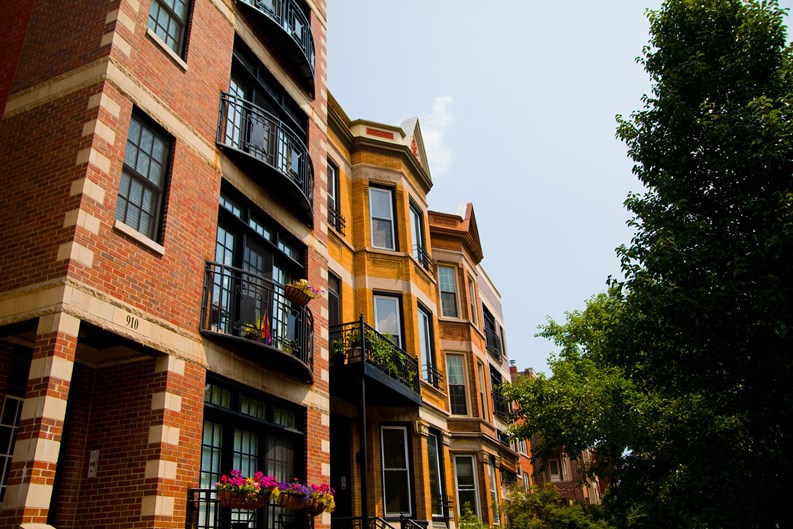
Most municipalities in the U.S. have laws on their books governing how exterior building façades must be inspected, maintained and repaired. While such legislation is occasionally enacted at the state level, generally these laws are a local matter. And while the specific rules and requirements may differ slightly from city to city, the basics are the same; they're designed to maintain structural integrity and prevent the tragic accidents that can occur when masonry, metal cladding, ice, or unsecured rooftop items dislodge or deteriorate and fall onto busy sidewalks below.
Structure & Safety
Façades and exteriors are complex, integrated systems composed of many different materials. They may be masonry, glass, metal, or a combination of all three, usually anchored to a steel frame. Over time, these different materials age and deteriorate at different rates and for different reasons.
For example, masonry façades, parapets, and many decorative architectural components are generally held together with concrete—and while brick or stone expands over its lifetime, the concrete pointing between those surfaces shrinks. These opposing forces inevitably cause material bonds to loosen over the years, leading to potential hazards. In colder climates, ice and snow can accumulate in the gaps caused by those loosened materials, the freeze-and-thaw cycle further accelerating the problem and causing additional potentially deadly scenarios.
Chicago
Chicago has one of the country’s most comprehensive façade inspection and maintenance regulatory frameworks. Several local building laws—primarily contained in the Chicago Building Code and Exterior Wall Program—directly affect multifamily residential buildings, especially mid-rise and high-rise properties.
A central regulation is the Chicago Façade Ordinance, which is codified in the Chicago Building Code’s provisions related to exterior wall safety, and later code updates. This ordinance was enacted in 1996 after multiple incidents in which façade materials detached from buildings and posed hazards to pedestrians. The ordinance requires periodic inspections of exterior walls and architectural elements to prevent structural failures and falling debris.
According to Chicago-based architecture, engineering, and inspection firm Klein & Hoffman, the law primarily applies to buildings 80 feet tall or higher, including multifamily residential buildings. The owners and boards of these buildings must participate in the city’s Exterior Wall Program by submitting regular façade condition reports prepared by licensed architects or structural engineers.
In addition to structural inspection requirements, Chicago development regulations can also impose design and material standards for building façades in certain zoning districts or planned developments. For example, some planning guidelines require front façades facing public streets to use masonry materials (like brick) and include architectural detailing, windows, and variations in rooflines to improve the streetscape. Such provisions aim to maintain aesthetic quality and urban character while ensuring durable building envelopes.
New York City
Along with Chicago, New York City may have the most—and most thorough—façade regulations in the country.
The granddaddy of façade inspection laws, New York’s Local Law 10, was famously passed in 1980 after a Barnard College student was struck and killed by a falling piece of building masonry. It was updated and renamed Local Law 11 in 1998. The city’s facade laws have periodically been expanded and refined over the years to ensure that building exteriors are well maintained, and that regulators have a systematic way to inspect and verify that maintenance.
“In New York City,” says William McCracken, a partner with Moritt Hock & Hamroff, “the formal name of Local Law 11—the Façade Inspection and Safety Program (FISP)—tells the whole story. Among other things, FISP requires that covered buildings having six stories or more be inspected by a qualified professional every five years. That professional then issues a report evaluating whether the building is safe, unsafe, or in need of repairs.”
Boston
Boston was one of the first big cities to follow New York City’s lead, instituting its own façade ordinance around 1995, says Stephen McDermott, an engineering consultant with Charlestown, Massachusetts-based SOCOTEC AE Consulting. “High-rise inspections are required to be performed on all buildings over 70 feet tall,” he says, “And that applies to any type of building—not just residential buildings. There aren’t any differing requirements for shared-interest community buildings such as condominiums or HOAs, and the focus of the effort hasn’t changed since its inception. It’s a review of tall structures in relation to potential falling hazards. The only criteria is that the height of the building is over 70 feet.”
Inspections
According to McDermott, “Façade inspection laws require a registered structural engineer or architect with relevant experience in high-rises [to conduct the inspection]. The engineer or architect identifies how they will perform the inspection, which, depending on the professional, could be by lift, swing, camera, drones, etc. They get a feel for the condition of the building, and complete an overall review of the structure. Life safety is primarily what it’s about, but they’re also looking at the watertightness of the structure” to head off problems caused by moisture infiltration.
In Chicago, the inspection process generally involves two levels of review. The first is an ongoing inspection, which is typically a visual survey of a building’s exterior surfaces. These inspections may be performed using binoculars, drones, or other observation methods to identify visible deterioration. The second is a critical examination, which is a more detailed, hands-on inspection often performed from scaffolding or suspended platforms. During a critical examination, engineers inspect masonry, anchors, façade panels, and other structural elements up close to assess potential safety hazards. (thorntontomasetti.com)
According to the International Institute of Building Enclosure Consultants (IIBEC), the frequency of these inspections varies depending on the materials and condition of the façade. Critical examinations are generally required every four, eight, or twelve years, depending on the building’s risk category and construction type. Additionally, Chicago’s ordinance requires that a significant portion of the façade be inspected—often at least 50 percent of the exterior wall area, with additional attention given to corners and terra-cotta elements that historically have a higher risk of failure.
Compliance
Requirements and regulations are one thing; the rules are right there, spelled out in black and white. Compliance with those rules may be another matter entirely.
For multifamily residential buildings, compliance with local inspection requirements has several practical implications. Boards and building owners must hire licensed professionals to conduct inspections and produce written condition assessment reports. These reports evaluate not only exterior walls but also balconies, parapets, canopies, signage, and other structural components attached to the façade. If an inspector identifies unsafe conditions, the board must undertake repairs within a specified timeframe, and may be required to install protective measures such as sidewalk canopies until repairs are completed.
Howard S. Dakoff, a partner with Chicago-based law firm Levenfeld Pearlstein, cautions boards not to defer maintenance and repair projects for too long—especially when it comes to their façades. “A board has a fiduciary duty to implement best practices to extend the useful life of its major building components, [including] its exterior. I’ve written about decisions boards make during tough financial times that can be problematic; sometimes they’ll defer a major capital project, like masonry, or their roof. If they defer a year, they may not pay anything during that year, but the costs of labor tend to increase annually—same for materials. So there’s already an incremental cost to deferring. And when that scale tips too far, it can actually cause an entirely different type of damage. And deferring necessary maintenance may absolutely become a breach of fiduciary duty.”
Failure to submit inspection reports or address identified hazards can also result in daily fines, which can range from $500 to $1,000 per day, along with potential stop-work orders or other administrative actions by the city’s Department of Buildings. These penalties create strong incentives for property managers and condo associations to be proactive.
The pros agree that obtaining expert advice and following through on the recommendations of those experts is the key to complying with both the letter and spirit of these important safety regulations. “The most important thing for co-op and condo boards to do is to listen to their professionals,” says McCracken. “Most board members are not building management professionals, much less [facade] specialists, so they usually have no independent way of knowing what is required in order to maintain a building envelope or comply with façade maintenance rules. Board members aren’t required to be experts, but they are required to listen to experts.”
Kasten concurs, adding that “condominium, co-op, and HOA boards have a duty to maintain, repair, and replace their common elements and common areas under both their community’s governing documents and applicable statutory provisions. Therefore, boards should be periodically looking at the condition of their building and determining whether any work is necessary to maintain it. Boards should engage knowledgeable contractors and professionals to assess the condition of their building and provide reports. The board should then use that information to carry out its duties.”
“The big thing to keep in mind is that once someone finds a hazard, work must be undertaken immediately to correct the problem,” McDermott stresses. “You can’t sit on it out of concern for how much it will cost the building to make the required repairs. The various City departments in charge of compliance don’t care. The ownership entity must do the work to make it safe immediately.”
Fundamentally, local laws enacted to monitor façade conditions are there to keep people safe—both the public walking by the property and the property's residents. For shared interest communities like condominiums, co-ops, and HOAs, vigilance is doubly important. In addition to the tragedy itself, the potential lawsuit that could result from an accident due to a neglected façade can be financially devastating. That’s why it is imperative for boards to stay on top of the requirements laid out by local laws and ordinances and to make any necessary repairs quickly and thoroughly. That potentially saves lives and provides financial protection to the community.
A.J. Sidransky is a staff writer/reporter for CooperatorNews, and a published novelist. He may be reached at alan@yrinc.com.






Leave a Comment